CDK9 2026 Target Evaluation Report: Biology, Validation, Competition, IP, and R&D Strategy
This Target Evaluation Report for CDK9 is generated from PatSnap Life Sciences MCP data workflows, combining Target & Disease MCP biology context with Clinical Trials MCP validation and competitive signals.
For AI teams building biomedical agents, PatSnap Life Sciences MCP Servers provide structured retrieval across target biology, disease context, clinical trials, drug evidence, IP intelligence, and other R&D intelligence sources.
173 Direct drug records from Target & Disease MCP | 130 Development records in target context | 218 Disease associations captured | 173 Clinical trial records from Clinical Trials MCP |
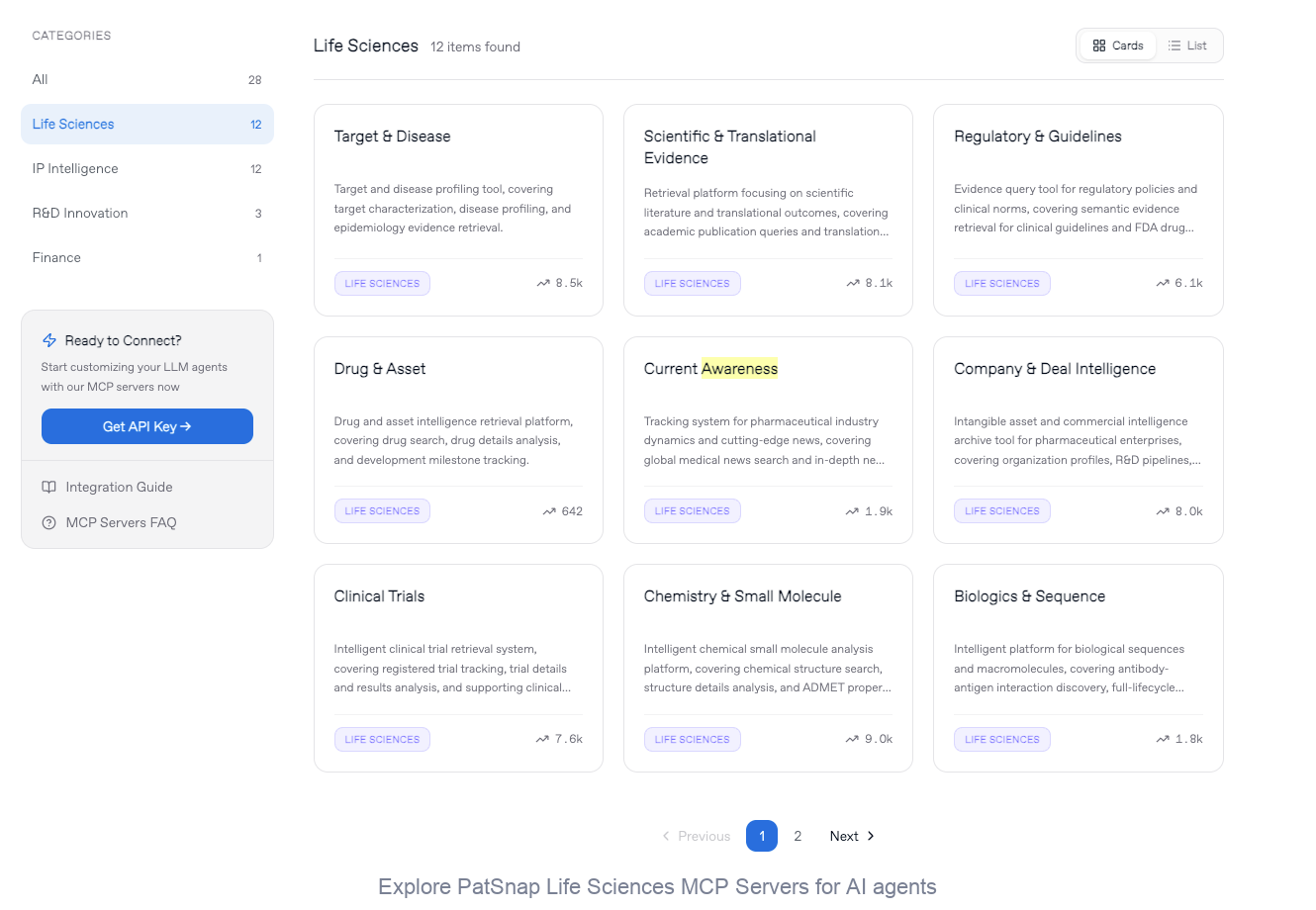
Explore PatSnap Life Sciences MCP Servers for AI agents
Executive View
CDK9 is a transcriptional elongation kinase, not just a cell-cycle target
Target & Disease MCP describes CDK9 as the catalytic core of P-TEFb, phosphorylating RNA polymerase II CTD, SUPT5H, RDBP, DSIF, NELF, EP300, MYOD1, AR, and other transcriptional regulators. It controls productive elongation, cytokine-inducible transcription, chromatin modification, mRNA processing, and replication-stress recovery.
Validation is specialized and oncology-focused
The MCP workflow retrieved 173 direct drug records, 130 development records, and 218 disease associations. Clinical Trials MCP returned 173 records, with active interest in hematologic malignancies and transcription-addicted tumors.
Competition includes AML, sarcoma, and lymphoma programs
Recent trial examples include a Phase IIa study in relapsed/refractory AML, BTX-A51 in liposarcoma or CIC-rearranged sarcoma, and GFH009 plus zanubrutinib in relapsed/refractory DLBCL.
IP and strategy view
CDK9 IP should focus on transcriptional dependency biomarkers, apoptosis priming, short-exposure dosing, combination regimens, and safety windows that avoid broad transcriptional toxicity.
Clinical Validation and Competitive Landscape
Clinical Trials MCP returned 173 registered trial records connected to CDK9. The sample below is used as a directional competitive readout rather than a full regulatory review.
| Trial | Phase | Status |
|---|---|---|
| Phase IIa safety and efficacy study in relapsed/refractory AML | Phase 2 | Recruiting |
| BTX-A51 in liposarcoma or CIC-rearranged sarcoma | Phase 1 | Active, not recruiting |
| GFH009 plus zanubrutinib in relapsed or refractory DLBCL | Phase 1/2 | Recruiting |
R&D Strategy Recommendation
CDK9 is attractive where transcriptional addiction can be measured. The key is dosing and patient selection that separate tumor vulnerability from normal transcriptional dependence.

Start building target evaluation agents with PatSnap Life Sciences MCP Servers
